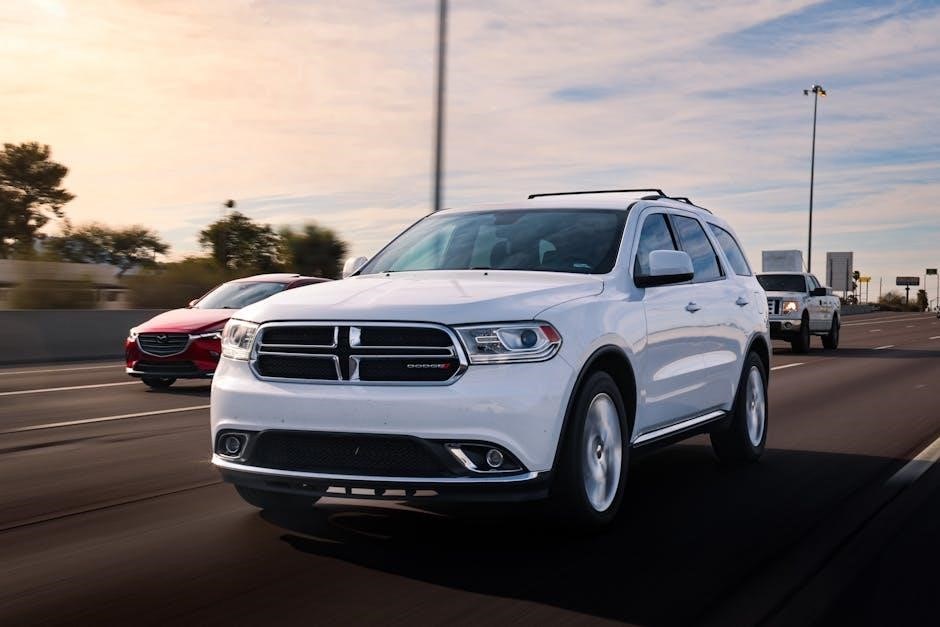
Dodge Durango Manual Transmission: A Comprehensive Overview (Updated 03/09/2026)
Dodge reintroduced a manual transmission option in the 2023 Durango, appealing to enthusiasts desiring greater control and a connection to classic muscle car feel.
The resurgence of the manual transmission in the 2023 Dodge Durango marks a significant moment for driving purists. For years, the automotive landscape shifted towards automatic transmissions, prioritizing convenience over driver engagement. However, Dodge listened to its dedicated fanbase, recognizing the enduring appeal of a hands-on driving experience.
This decision wasn’t merely about offering a nostalgic option; it was about providing a deeper connection between driver and machine. The availability of a four-speed manual, and the potential for swaps, caters to those who relish the control and responsiveness that only a manual gearbox can deliver. It acknowledges the “old school appeal” inherent in the Durango’s muscle car lineage, blending modern capability with a classic driving ethos.
Historical Context: Durango Transmissions Through the Years
The Dodge Durango’s transmission history reflects evolving automotive trends. Early Durango generations offered both a four-speed manual and a five-speed automatic, providing buyers with a choice aligned with the era’s preferences. As the vehicle progressed, automatic transmissions became dominant, mirroring industry-wide shifts towards convenience and perceived ease of use.
By 2009, the Durango even experimented with a hybrid powertrain featuring a 5.7-liter V8 paired with electric motors. However, the manual transmission gradually faded from the Durango lineup, becoming a sought-after feature among enthusiasts. The 2023 reintroduction represents a return to the Durango’s roots, acknowledging the enduring desire for driver-controlled gear selection.
The 2023 Durango and the Manual Transmission Option
The 2023 Dodge Durango marked a significant moment for enthusiasts with the surprising return of a manual transmission. Dodge acknowledged the enduring appeal of a direct connection to the vehicle, offering a nod to its muscle car heritage. This option is available alongside the existing automatic transmissions, catering to a broader range of driver preferences.

This move positions the 2023 Durango as the last of its generation, smoothed over and refined, yet still offering a raw, engaging driving experience for those who choose the manual. It’s a final celebration of the Durango’s legacy before potential future redesigns.

Engine Compatibility with Manual Transmissions
Historically, the Dodge Durango offered a range of engine and transmission combinations. Early generations featured both four-speed manual and five-speed automatic options, broadening driver choice. However, compatibility isn’t universal across all Durango engines. The 5.7L Hemi V8 is a popular candidate for manual swaps, due to its robust nature and existing aftermarket support for such conversions.
The newer 3.0L Twin-Turbo SIXPACK engine’s manual availability remains a question mark, with limited information currently available regarding factory-supported manual configurations for this powertrain. Exploring potential compatibility requires careful consideration of drivetrain components and electronic integration.
5.7L Hemi V8 and Manual Swaps
The 5.7L Hemi V8 is frequently chosen for manual transmission swaps in the Dodge Durango, largely due to its widespread availability and established aftermarket. These swaps often involve utilizing transmissions from other vehicles, like the JK Wrangler, which bolt up with minimal modification. Successful swaps require attention to motor mount placement, ensuring proper alignment for driveshaft functionality.
Stock driveshafts can often be retained with correct motor placement, simplifying the conversion process. The Hemi’s power output pairs well with a manual, enhancing the driving experience. However, careful planning and component sourcing are crucial for a reliable and enjoyable outcome.
3.0L Twin-Turbo SIXPACK Engine – Manual Availability?
Currently, Dodge does not offer a factory manual transmission option with the 3.0L Twin-Turbo SIXPACK engine in the Durango. However, the introduction of this potent engine in the 2026 Charger models – both Scat Pack and R/T – does feature manual availability. This sparks speculation about potential future swaps for Durango enthusiasts.
While no direct bolt-on solutions exist presently, the Charger’s configuration provides a roadmap for potential adaptation. The complexity and cost of such a swap would be significant, requiring substantial modifications to the Durango’s drivetrain and control systems. It remains a project for highly skilled individuals.
Available Manual Transmission Types for Durango
Historically, the Dodge Durango offered both four-speed and five-speed manual transmissions across different generations. Early Durango models featured the four-speed, providing a basic but engaging driving experience. Later iterations, extending through 2009, saw the introduction of a more refined five-speed manual option, enhancing shift quality and overall control.
These factory manual transmissions were paired with various engine options, including V6 and V8 configurations. Finding these original transmissions today can be challenging, often requiring diligent searching through salvage yards or enthusiast networks. Availability significantly impacts the feasibility of manual swaps.
Four-Speed Manual Transmission (Early Generations)
The initial Dodge Durango generations prominently featured a robust, yet relatively simple, four-speed manual transmission. This transmission offered a direct connection between driver and machine, appealing to those prioritizing a raw driving experience. While not known for its refinement, it proved durable and capable for its time.

Gear ratios were tailored to balance everyday usability with off-road capability, reflecting the Durango’s intended versatility. Locating a well-maintained four-speed today presents a significant challenge, as many have been replaced with automatics over the years. Parts availability is also limited, requiring resourceful sourcing.
Five-Speed Manual Transmission (Mid-Generations)
As the Durango evolved through its mid-generations, Dodge responded to demands for improved fuel efficiency and a more refined driving experience by introducing a five-speed manual transmission. This upgrade offered closer gear ratios, enhancing both acceleration and highway cruising. It represented a significant step forward in terms of driver comfort and overall performance.
The five-speed proved more popular than its four-speed predecessor, resulting in a slightly greater number of surviving examples today. However, finding one in pristine condition still requires diligent searching. While generally reliable, regular maintenance, including fluid changes, is crucial for longevity and smooth operation.
The JK Swap: Integrating a Hemi with a Manual
The “JK swap” refers to integrating a 5.7L Hemi V8, commonly sourced from a Jeep Grand Cherokee (WK/JK), into a Dodge Durango, often paired with a manual transmission. This conversion is popular among enthusiasts seeking a significant power upgrade and the engaging driving experience of a stick shift. The Hemi bolts up relatively easily with the existing transfer case and, with correct motor placement, stock driveshafts can often be retained.
However, successful execution requires careful planning and sourcing the correct components. Availability of suitable manual transmissions for this swap can be a challenge, demanding patience and resourcefulness from the builder.
Challenges of Manual Transmission Swaps
Manual transmission swaps in a Dodge Durango aren’t without hurdles. Driveshaft compatibility often necessitates modifications or custom fabrication to ensure proper length and function, avoiding vibrations or damage. Precise motor mount placement and alignment are critical; even slight misalignments can cause stress on the drivetrain and compromise performance.
Furthermore, integrating the manual transmission requires addressing the electrical system, including disabling the automatic transmission control module and potentially modifying the vehicle’s wiring harness. Unexpected issues, like spontaneous shifts into “manual” mode reported by some Durango owners, highlight potential complexities.
Driveshaft Compatibility and Modifications
When performing a manual transmission swap on a Dodge Durango, driveshaft compatibility is a primary concern. The length difference between the original automatic transmission setup and the manual configuration frequently requires either shortening the existing driveshaft or sourcing a custom-built one. Ensuring proper U-joint angles is crucial to prevent vibrations and premature wear on the drivetrain components.
JK swaps utilizing a 5.7L Hemi V8 suggest the stock driveshafts can work with correct motor placement, but this isn’t guaranteed for all scenarios. Careful measurement and potential modification, including slip yokes and carrier bearing adjustments, are often necessary for a smooth and reliable operation.

Motor Mount Placement and Alignment
Precise motor mount placement and alignment are absolutely critical during a Dodge Durango manual transmission swap. Incorrect positioning can lead to numerous issues, including driveshaft angle problems, stress on the transmission, and even damage to the engine itself. The goal is to replicate the factory engine alignment as closely as possible, accounting for the manual transmission’s different dimensions.
JK swaps with the 5.7L Hemi V8 demonstrate that correct motor placement is achievable, allowing the stock driveshafts to potentially function. However, this relies on meticulous attention to detail and potentially fabricating or modifying motor mount brackets to ensure proper alignment and clearance.
Transfer Case Considerations for Manual Swaps
When undertaking a manual transmission swap in a Dodge Durango, careful consideration of the transfer case is paramount. Compatibility with the new transmission and maintaining proper driveline angles are key concerns. Fortunately, JK swaps utilizing the 5.7L Hemi V8 demonstrate that the stock transfer case can often be retained.
However, this successful integration hinges on accurate motor mount placement, ensuring the transfer case input shaft aligns correctly with the transmission output shaft. Any misalignment can induce vibrations, premature wear, and potential failure. Driveshaft modifications may still be necessary to accommodate any slight angle changes resulting from the swap.
Electrical System Integration for Manual Transmissions
Integrating a manual transmission into a Dodge Durango originally equipped with an automatic requires careful attention to the electrical system. The automatic transmission’s sensors and control modules must be addressed, as they are no longer needed. This includes disabling or removing signals related to gear selection and torque converter function to avoid error codes.
Conversely, the manual transmission may require new electrical connections for features like the reverse light switch. Proper wiring and potentially a new transmission control module (TCM) configuration are crucial for seamless operation and to prevent conflicts within the vehicle’s network.
Durango Transmission Issues: Automatic to Manual Shifting
Some Durango owners report a disconcerting issue where the automatic transmission unexpectedly enters a manual-like shifting mode, causing erratic RPM fluctuations. This symptom, observed in 2014 models and later, involves the engine revving excessively while the transmission seems to lose its automatic control, mimicking manual gear selection without driver input.
Potential causes range from sensor malfunctions within the transmission control module (TCM) to internal transmission component failures. Diagnosis requires a thorough scan for error codes and potentially a transmission fluid analysis. Repair costs can vary significantly, from relatively inexpensive sensor replacements to more substantial transmission rebuilds or replacements.
Identifying the Problem: Symptoms and Causes
The primary symptom is a sudden shift in transmission behavior, where the Durango unexpectedly behaves as if in manual mode while still operating in ‘Drive’. Owners describe the engine RPMs surging uncontrollably, often accompanied by harsh or delayed gear changes. This isn’t intended manual shifting; it’s an automatic system malfunctioning.
Causes can be multifaceted. A failing Transmission Control Module (TCM) is a prime suspect, alongside faulty speed sensors or solenoids. Internal transmission issues, like worn valve bodies or damaged clutches, can also trigger this erratic behavior. A diagnostic scan is crucial to retrieve error codes, pinpointing the source of the problem and guiding repair efforts.
Potential Solutions and Repair Costs
Addressing this issue typically begins with a thorough diagnostic scan to identify the root cause. Simple fixes, like replacing a faulty speed sensor, might cost between $150-$300, including parts and labor. However, if the TCM is the culprit, replacement and reprogramming can range from $800 to $1,500.
More extensive repairs, such as rebuilding the transmission or replacing the valve body, are significantly more expensive, potentially exceeding $2,000-$4,000. Considering the age of affected Durangos (like the 2014 models reported), a complete transmission swap might be a cost-effective alternative, costing around $1,800 ⎻ $3,500 depending on whether it’s new or used.
Performance Benefits of a Manual Durango
Opting for a manual transmission in a Dodge Durango unlocks a more engaging driving experience, granting drivers complete control over gear selection and engine RPM. This direct connection translates to improved acceleration and responsiveness, particularly during spirited driving or off-road adventures. Manual transmissions generally offer a slight power advantage, as less energy is lost through a torque converter.
Enthusiasts also appreciate the enhanced control during towing, allowing precise gear selection to maintain optimal engine braking and power delivery. Furthermore, a manual Durango provides a visceral, connected feel that many find preferable to the detached sensation of an automatic, fostering a deeper bond between driver and machine.
Aftermarket Support for Durango Manual Transmissions
The aftermarket for Durango manual transmissions, while not as extensive as automatic options, is steadily growing to meet enthusiast demand. Performance clutch kits are readily available, offering increased clamping force for handling higher horsepower engines and aggressive driving styles. Shifter modifications, including short-throw shifters, provide quicker, more precise gear changes, enhancing the driving experience.
Upgraded shift knobs and bushings further refine the feel of the transmission. As the popularity of manual swaps increases, more specialized components are becoming available, catering to those seeking to maximize performance and reliability. Dedicated forums and online retailers are key resources for sourcing these parts.
Clutch Kits and Upgrades
For Durango manual transmissions, selecting the right clutch kit is crucial for matching engine output and driving style. Stock replacement clutches are suitable for mild performance builds, offering reliability and a familiar pedal feel. However, enthusiasts pursuing significant power gains should consider performance clutch kits.
These kits often feature upgraded pressure plates, friction discs, and throw-out bearings, providing increased clamping force and heat resistance. Options range from organic clutches for street use to ceramic clutches designed for track applications. Upgrading the flywheel with a lighter or dual-mass unit can further enhance performance and responsiveness.
Shifter Options and Modifications
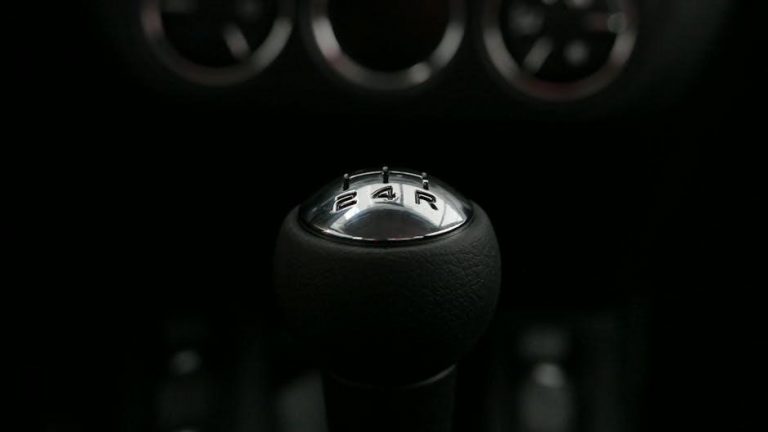
The factory shifter in a Durango manual transmission can sometimes feel vague or imprecise. Fortunately, a variety of aftermarket shifter options and modifications are available to improve the driving experience. Short-throw shifters reduce the distance between gears, enabling quicker and more direct shifts. These are popular among performance-oriented drivers seeking enhanced control.
Shift knob replacements offer a personalized touch and can improve grip and feel. Bushing upgrades, replacing worn or soft rubber bushings with firmer polyurethane alternatives, minimize shifter play and enhance precision. These modifications collectively contribute to a more connected and engaging driving experience, maximizing the potential of the manual transmission.
Legal Considerations for Transmission Swaps
Performing a manual transmission swap in a Dodge Durango involves navigating a complex web of legal regulations. These vary significantly by state and even locality, demanding thorough research before commencing any modifications. Emissions compliance is a primary concern; altering the powertrain can invalidate existing certifications, requiring re-inspection and potential modifications to meet current standards.
Vehicle safety standards also play a crucial role. Modifications must not compromise the vehicle’s structural integrity or safety systems. Documentation of all changes is vital, potentially including engineering reports or certifications. Ignoring these legal aspects can result in failed inspections, fines, or even the inability to legally operate the vehicle on public roads.
Cost Analysis: Manual Swap vs. Automatic Maintenance
Evaluating the financial implications of a manual transmission swap versus continued automatic maintenance requires a detailed cost breakdown. A manual swap typically involves parts – transmission, clutch, flywheel, shifter – and labor, potentially ranging from $3,000 to $8,000 or more, depending on complexity and professional rates. Unexpected issues during the swap can inflate these costs.
Conversely, automatic transmission maintenance includes fluid changes, filter replacements, and potential repairs. While seemingly less expensive initially, automatic transmissions are prone to costly failures over time. Considering a five-year period, the cumulative cost of automatic maintenance and potential major repairs could approach or even exceed the initial manual swap investment.

Finding Parts for a Durango Manual Transmission Conversion
Sourcing components for a Durango manual transmission conversion demands diligent searching and networking. Early Durango models (pre-2009) utilized four and five-speed manuals, but finding complete, usable units can be challenging. JKOwners forums suggest compatibility with Hemi swaps, but availability remains a key hurdle. Online marketplaces like eBay and Craigslist often list used transmissions, requiring careful inspection.
Specialty transmission retailers and Dodge performance parts suppliers are valuable resources. Clutch kits and shifter upgrades are readily available from aftermarket vendors. Be prepared to potentially source parts from multiple locations, and factor in shipping costs. Patience and thorough research are crucial for a successful parts acquisition.
Resources and Forums for Durango Enthusiasts
Durango owners undertaking manual transmission conversions benefit immensely from online communities and dedicated forums. JKOwners Forum provides valuable insights, particularly regarding Hemi swaps and transmission compatibility, with discussions on driveshaft and motor mount considerations. CarGurus offers a platform for troubleshooting issues, like unexpected shifts into manual mode, and connecting with other owners facing similar challenges.

Reddit’s r/dodge and dedicated Durango groups are excellent for general advice and parts sourcing. Websites like RockAuto and Summit Racing carry performance parts. These resources facilitate knowledge sharing, problem-solving, and access to a network of experienced Durango enthusiasts.

Future Outlook: Manual Transmissions in Dodge Vehicles
The resurgence of manual transmissions in the 2023 Dodge muscle car lineup, including the Durango, signals a potential shift acknowledging enthusiast demand. While Dodge is focusing on the 3.0L Twin-Turbo SIXPACK engine and new Charger models, the future of manual options beyond this generation remains uncertain.
Considering the industry trend towards automatics and electric vehicles, continued manual availability hinges on sustained consumer interest. The success of the 2023 offering will likely influence Dodge’s decision-making. Enthusiast advocacy and aftermarket support for manual swaps will be crucial in preserving this option for Durango drivers.